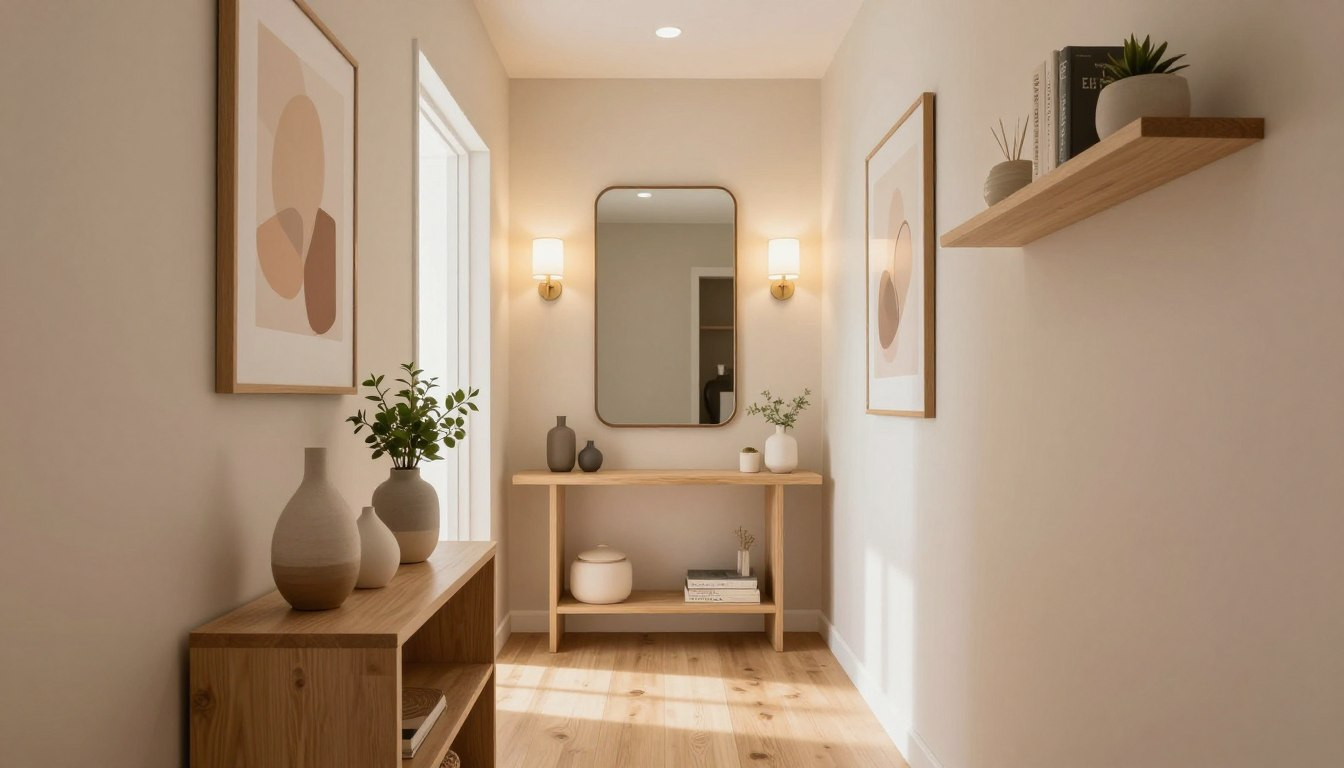
You walk through your front door with an armful of groceries, and immediately, you are bumping your elbows against the walls. For many apartment renters and small-home owners, the hallway feels less like a welcoming entryway and more like a cramped, dark bowling alley.
Because narrow corridors are transition zones, they are usually the last place we think to decorate. They suffer from a lack of natural light, zero floor space, and constant wear-and-tear from kids dropping backpacks and dogs wagging their tails against the drywall.
But transforming this “dead zone” into a stunning architectural feature doesn’t require a contractor, a massive budget, or a lost security deposit. By utilizing modern drill-free lighting, clever optical illusions, and ultra-slim storage, you can visually widen your hallway while protecting your walls. Let’s dive into the best practical hacks to make your narrow corridor feel bright, wide, and incredibly welcoming.
Why Narrow Hallways Need a Specific Design Strategy
You cannot treat a 3-foot-wide hallway the same way you treat a living room. If you place standard furniture or bulky picture frames here, you create physical obstacles. The core rule for narrow spaces is “The Shoulder-Bump Test”: if you have to turn your body sideways to walk past a piece of decor, it does not belong in your hallway.
1. Strategic Lighting Without Hardwiring (The Renter’s Hack)

Most rental hallways have a single, dim overhead “boob light” that casts harsh shadows, making the space feel like a tunnel. To widen a space visually, you need to wash the walls with light.
Rechargeable LED Wall Sconces
If your landlord won’t let you hire an electrician to install wall sconces, you are in luck. The 2026 design market is flooded with high-end, battery-operated LED wall sconces. You mount the lightweight base to the drywall using stretch-release adhesive strips (like Command strips), and the magnetic bulbs easily pop out to be charged via USB. Placing two of these down a dark corridor immediately breaks up the “tunnel” effect and adds luxury.
Motion-Sensor Baseboard Lighting
If you have kids who wake up in the middle of the night, or pets navigating the house, install peel-and-stick LED motion-sensor light strips right above your baseboards. It provides a soft, guiding glow that makes the floor plan look wider without blinding anyone with overhead lights.
2. Color Choices and “Scuff-Proof” Walls

Narrow hallways take a beating. Because you walk so close to the walls, they are magnets for dirty fingerprints, stroller scuffs, and dog drool.
The Two-Tone Height Hack
To make the ceiling look higher and protect your walls, create a faux-wainscoting effect. Apply a durable, wipeable vinyl peel-and-stick wallpaper on the bottom half of the wall (about 36 inches high). Leave the top half painted a bright, crisp white. The darker or patterned bottom hides daily scuff marks from kids and pets, while the white top reflects light and expands the visual width of the hall.
Painting the “End Wall”
If your hallway is incredibly long and feels like a never-ending corridor, paint the very end wall (or the door at the end of the hall) a dark, warm color like charcoal or navy blue. Dark colors visually “pull” the wall forward, making the long hallway feel cozier and better proportioned.
3. Safe Mirror Placement for High-Traffic Zones

Mirrors are the oldest trick in the book for doubling visual space, but in a narrow hallway, they pose a physical risk. A heavy glass mirror sticking out from the wall is easily knocked down by a passing laundry basket or a rowdy teenager.
Shatterproof Acrylic Mirrors
Instead of heavy framed glass, use frameless acrylic mirror decals. They weigh ounces instead of pounds, lie completely flush against the drywall (consuming zero space), and will not shatter into dangerous shards if someone accidentally bumps into them.
The “Window Bounce” Position
To get the most out of your mirror, look at where the natural light from adjacent rooms spills into the hallway. Place your mirror exactly where that light hits the wall. It will catch the sunbeam and shoot it further down the dark corridor.
4. Flooring: The Runner Rug Rules
A bare hallway floor is noisy and sterile. A runner rug adds immediate warmth, absorbs echoing footsteps, and draws the eye forward.
The Crucial Non-Slip Pad
Safety Warning: Never place a runner rug on a hard hallway floor without a heavy-duty, edge-to-edge non-slip pad. Narrow hallways are high-velocity zones for kids running in socks or pets chasing balls. A loose rug will turn into a dangerous slip-and-slide.
Washable Rugs are Mandatory
Because 100% of the foot traffic funnels through this narrow space, your runner rug will get filthy fast. Skip the expensive vintage wool and invest in a machine-washable runner (like Ruggable). When mud gets tracked in, you just peel it off and toss it in the washing machine.
5. Ultra-Slim Storage Solutions
If your narrow hallway is also your main entryway, you need a place to drop keys and shoes without blocking the fire exit path.
- The Floating Ledge: Skip the bulky console table with four legs. Use a piece of wood and two heavy-duty adhesive floating shelf brackets to create a tiny “drop zone” shelf just 6 inches deep. It holds your mail and keys while keeping the floor completely clear.
- Tilt-Out Shoe Cabinets: If you must have shoe storage, buy ultra-slim tilt-out shoe cabinets (like the famous IKEA Trones or Hemnes). They are typically only 7 to 9 inches deep, allowing them to sit flat against the wall without eating up your walking path. (Note: Always anchor these to the wall to prevent tipping).
6. The “Flush” Art Gallery
Thick, ornate picture frames protruding two inches off the wall will get knocked crooked every time you walk by with a heavy winter coat on.
If you want a gallery wall in a tight hallway, use ultra-slim metal frames or canvas prints that sit perfectly flush against the wall. Better yet, create a “grid” of family photos using renter-friendly Washi tape as decorative, completely flat frames. It provides massive personality with zero physical bulk.
Conclusion
Your narrow hallway doesn’t have to be a dark, ignored tunnel you rush through to get to the living room. By prioritizing flush-mounted art, washable flooring, and battery-operated lighting, you can create a bright, inviting corridor. Remember to always prioritize safety and functionality first—keep the floor path wide, anchor your slim storage, and let your creative optical illusions do the heavy lifting.
Frequently Asked Questions
Q: How do I brighten a narrow hallway with absolutely no windows?
A: If you cannot hardwire new lights, use rechargeable LED wall sconces and stick-on under-cabinet lights along the baseboards. Paint the walls a highly reflective, cool-toned white (like Benjamin Moore’s Chantilly Lace) to maximize whatever artificial light you introduce.
Q: Are runner rugs a tripping hazard for elderly family members or toddlers?
A: They can be if they lack grip or have curled edges. To make a runner rug safe, it must be paired with a high-quality, edge-to-edge rubber grip pad. Additionally, you can use specialized double-sided rug tape on the corners to ensure they stay pinned completely flat to the floor.
Q: What is the minimum width needed to add a console table to a hallway?
A: Building codes generally require hallways to have a clear width of at least 36 inches for safe passage and fire safety. If your hallway is exactly 36 inches wide, you should not add furniture to the floor. Instead, use wall-mounted floating shelves placed higher up (around chest level) to hold keys without restricting foot traffic.
Q: How can I protect my hallway walls from my dog constantly rubbing against them?
A: Apply a heavy-duty, wipeable peel-and-stick vinyl wallpaper to the bottom three feet of your hallway walls. Vinyl is highly durable, resists pet oils and dirt, and can be scrubbed down with a damp sponge much easier than standard matte apartment paint.