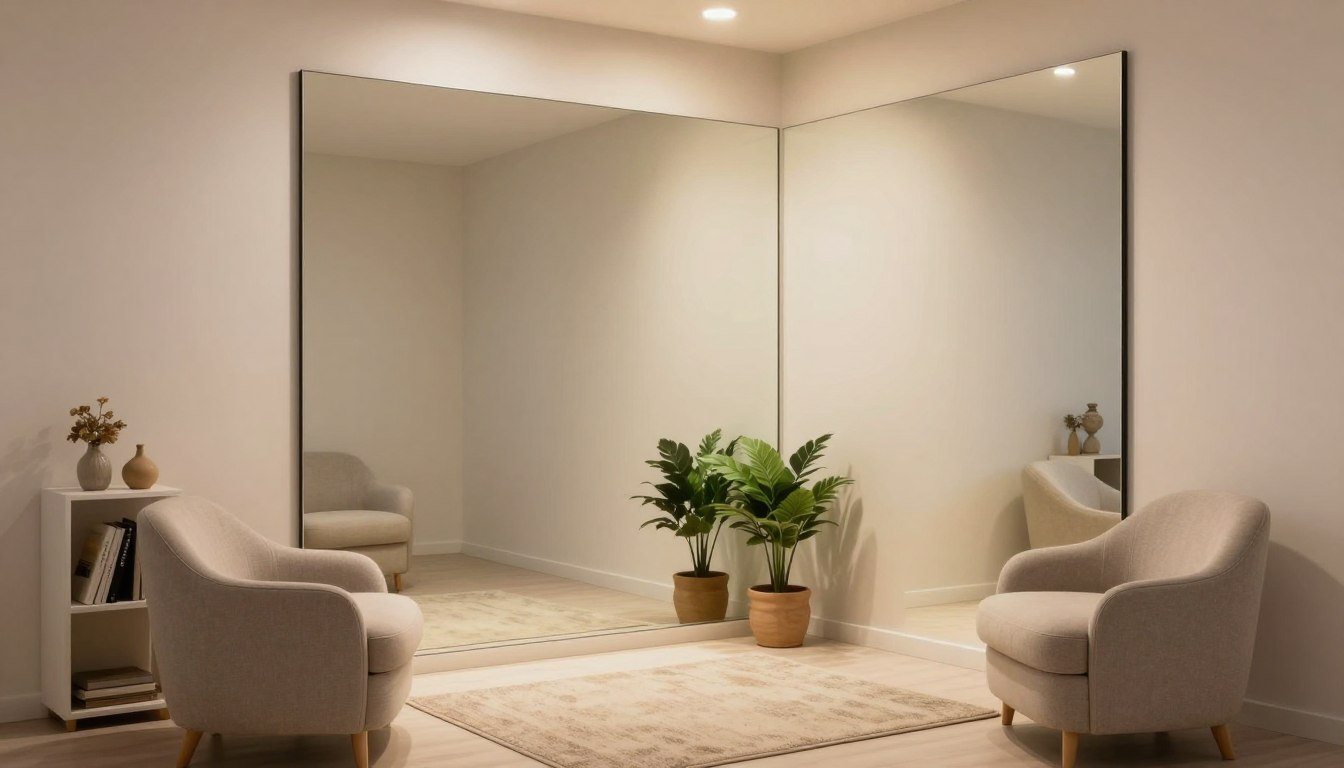
If you’ve ever stood in a cramped, dimly lit entryway or a tiny apartment bedroom, you know how claustrophobic small spaces can feel. You might want to install a massive wall of mirrors to double the light and space, but there is a catch: you’re renting, or you simply don’t want to drill massive holes into your pristine drywall.
The good news? You can achieve a stunning, high-end mirror wall without picking up a power drill. By utilizing modern heavy-duty adhesives, lightweight acrylic panels, and strategic layouts, you can dramatically transform your room while keeping your security deposit entirely safe.
In this guide, we will walk you through the safest methods to hang mirrors without nails, the best renter-friendly materials to buy, and crucial safety steps to ensure your new accent wall remains securely attached—even in busy households with kids and pets.
Why a Mirror Wall is the Ultimate Small Space Hack
Interior designers have relied on mirrors for decades to create optical illusions. A well-placed mirror wall acts as a “faux window,” reflecting both artificial and natural light back into the room. This makes tight spaces feel instantly breathable.
Perfect for Renters and Nervous Homeowners
Traditional heavy glass panels require lag bolts and heavy-duty drywall anchors that can completely destroy a wall. Drill-free mirror installations use advanced, stretch-release adhesives that hold immense weight but peel off cleanly when it’s time to move. This means zero spackling, zero sanding, and zero lost deposits.
Step 1: Planning, Measuring, and Choosing Materials
Before you buy anything, you need to map out your wall. Choose a wall directly opposite a window to maximize daylight, or place it behind a dining table to make the dining area feel twice as large. Use a tape measure and a bubble level to mark your top and bottom boundaries lightly with a pencil.
Choosing Your Mirror Type: Glass vs. Acrylic
The material you choose dictates the safety and cost of your project:
- Acrylic Mirror Panels: The ultimate choice for renters and families with children. They weigh a fraction of glass, are shatterproof, and stick to the wall easily with basic double-sided tape.
- Glass Mirrored Tiles: Great for a modular, budget-friendly DIY project. They provide a sharper reflection than acrylic but require stronger adhesive.
- Frameless Glass Sheets: Offer a seamless, high-end gym or studio look, but they are heavy. You must be precise with your heavy-duty mounting tape to ensure they stay put.
| Mirror Type | Key Benefits | Typical Cost Range | Best Use Case |
|---|---|---|---|
| Acrylic Panels | Lightweight; shatter-resistant; safe for kids | $30–$150 | Rentals and children’s playrooms |
| Modular Glass Tiles | Easy DIY install; budget-friendly | $50–$200 | Staggered entryway grids |
| Full Glass Sheets | Uninterrupted reflection; luxury look | $300–$1,000+ | Main living room focal walls |
Step 2: Selecting the Safest Adhesives

Your mirror wall is only as secure as the tape holding it up. Choosing the wrong adhesive is the number one reason drill-free projects fail.
Heavy-Duty Mounting Tape
For small room designs using acrylic or small glass tiles, industrial double-sided mounting tape (like heavy-duty Command™ strips or Gorilla double-sided tape) is ideal. Always look at the pound rating on the packaging. Pro Tip: Over-engineer your support. If your mirror tile weighs 2 lbs, use enough tape rated to hold 5 lbs to create a reliable safety buffer.
When to Avoid Construction Adhesives
Liquid construction adhesives (like Liquid Nails) are incredibly strong, but they are not renter-friendly. Removing them will tear the drywall paper straight off the studs, guaranteeing you lose your security deposit. Stick strictly to high-grade removable tapes if you don’t own the home.
Step 3: Crucial Wall Preparation

Tape will not stick to dust, cooking grease, or soapy residue. If you skip wall prep, your mirrors will fall, presenting a massive hazard to pets and toddlers.
- Wipe Down: Clean the entire wall area vigorously with isopropyl rubbing alcohol and a microfiber cloth. Do not use household glass cleaners, as they leave a slick chemical film.
- Check Paint: Ensure your paint isn’t actively flaking. Tape sticks to the top layer of paint; if the paint is loose, the mirror will pull the paint right off the wall.
- Wait to Dry: Let the alcohol evaporate for at least 30 minutes before applying any tape.
Step 4: Layout Strategies for Maximum Impact

Before you peel the backing off your tape, “dry-fit” your layout. Lay your mirrors out on the floor exactly how you want them on the wall. This allows you to visualize spacing without committing.
A tight grid layout with 1/4-inch gaps offers a sleek, modern look perfect for studio apartments. Alternatively, a staggered tile layout mimics subway tile, adding visual texture and movement to a boring hallway.
Step 5: The Drill-Free Installation Process

Apply your double-sided tape strips to the back of the mirror. Place strips along all four edges and place a large strip directly in the center to prevent the middle of the mirror from bowing inward.
Start from the bottom of your wall and work your way up. Rest your first row of mirrors gently against your baseboard or your penciled level line. Press the mirror firmly into the wall, holding steady pressure for 60 seconds to activate the adhesive’s bond. If your mirrors are heavy, recruit a partner to hold the glass while you check the level.
Safety, Maintenance, and Removal
A drill-free wall requires occasional maintenance. Every few months, gently press on the corners of your mirrors to ensure the adhesive hasn’t loosened. If you live in a highly humid environment (like a bathroom), steam can weaken standard tape. Always buy moisture-rated tape for humid zones.
How to Safely Remove the Mirrors
When your lease is up, do not yank the mirrors off the wall. Take a hairdryer on low heat and gently warm the edges of the mirror. The heat will soften the adhesive, allowing you to slowly twist and peel the mirror away without taking the landlord’s drywall with it. Use a plastic scraper and some adhesive remover (like Goo Gone) to clean up any leftover stickiness.
Conclusion
Building a mirror wall without drilling is an incredibly rewarding weekend DIY project. By selecting lightweight acrylic or modular tiles, prepping your walls with alcohol, and utilizing heavy-duty stretch-release tape, you can effectively double the visual footprint of your small room safely. Take your time with the measuring, recruit a friend to help, and enjoy your bright, newly expanded space!
Frequently Asked Questions
Is a drill-free mirror wall safe if I have toddlers or large dogs?
Yes, but you must make the right material choices. If you have an active household, skip the heavy glass and use lightweight, shatterproof acrylic mirror panels instead. If an acrylic panel happens to fall, it will not shatter into dangerous shards, keeping your family perfectly safe.
Can I put a drill-free mirror wall in my bathroom?
You can, but standard double-sided tape will quickly fail due to hot shower steam. You must purchase heavy-duty marine-grade tape or moisture-rated bathroom adhesives to ensure the panels don’t slip off the wall over time.
Why does my mirror look distorted or like a funhouse?
Distortion usually happens when using acrylic panels on a bumpy or heavily textured wall. Because acrylic is slightly flexible, it bends to the shape of the wall underneath. To fix this, ensure your wall is completely flat, or stick the acrylic to a rigid piece of foam core board before mounting it.
Will peeling the tape off ruin my apartment’s paint?
If you use designated renter-friendly, stretch-release adhesives (and follow the removal instructions carefully by stretching the tab straight down), your paint should be fine. However, if the apartment was painted poorly or less than 30 days prior to installation, even the gentlest tape might peel up small flakes.